

|
Quantity
|
Total
|
||
|
|
|||
|
|
|||
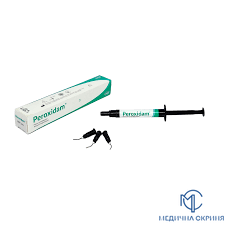
PeroxiDam (Latus) – Professional Liquid Dam for Gingival Protection
PeroxiDam by Latus is a high-quality, light-cured composite material designed for the reliable isolation of soft tissues during professional dental procedures. Specifically formulated for use during office teeth bleaching, microabrasion, and air-abrasion treatments, it acts as a robust physical barrier against aggressive chemical agents and mechanical irritants.
Key Applications
-
Teeth Whitening: Protects the gingival margin from high-concentration hydrogen peroxide gels.
-
Microabrasion: Shields soft tissues from abrasive pastes and acids.
-
Enamel Etching: Prevents accidental contact of phosphoric acid with the gums.
-
Additional Sealing: Can be used to fix rubber dam sheets or seal leaks in complex clinical cases.
Advanced Features & Technologies
-
Thixotropic Consistency: The material features a "smart" flow technology. It flows easily under pressure from the syringe for precise placement but stays exactly where it is applied without running onto the tooth surface.
-
Fast Photo-polymerization: Utilizing advanced monomers, PeroxiDam cures within 10–20 seconds under a standard dental curing light, significantly reducing chair time.
-
High Contrast & Visibility: The bright color (usually blue or green) provides excellent visual contrast against both the teeth and gums, ensuring the clinician can see exactly which areas are protected.
-
Low Exothermic Reaction: The chemical formulation is optimized to minimize heat release during curing, ensuring maximum patient comfort and preventing thermal sensitivity of the gums.
-
Easy Removal: After the procedure, the polymerized material maintains enough elasticity to be removed in one large piece or several large fragments using a dental explorer, leaving no residue behind.
Instructions for Use
-
Dry the gingival area thoroughly.
-
Apply a layer of PeroxiDam (3–5 mm wide and 1.5–2 mm thick) onto the gum margin.
-
Light-cure for 10–20 seconds using a scanning motion.
-
Perform the bleaching or abrasion procedure.
-
After completion, gently lift the edge of the barrier with an instrument and remove.