


|
Quantity
|
Total
|
||
|
|
|||
|
|
|||
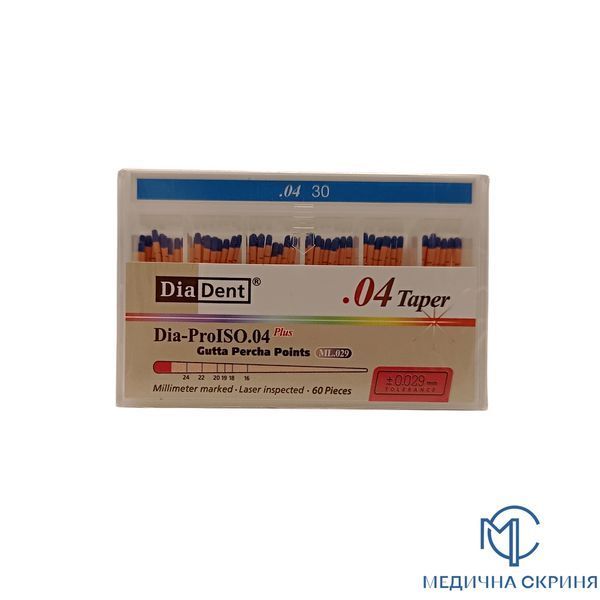
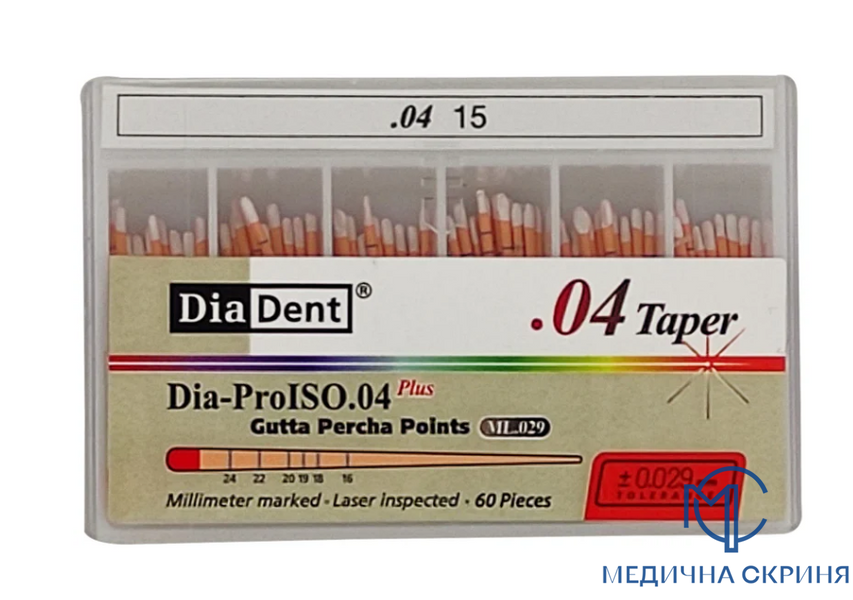
Dia-ProISO .04 Gutta-Percha Points (0.04 Taper) - Diadent
Dia-ProISO .04 gutta-percha points from Diadent are a modern material for root canal obturation. They feature a larger taper (0.04, or 4%) compared to classic 0.02 points, and are specifically designed for use in canals that have been shaped using rotary nickel-titanium (NiTi) systems.
Technology and Standardization
-
Taper (0.04): The .04 designation indicates that the point diameter increases by $0.04 \text{ mm}$ for every millimeter of length. This taper corresponds to most modern rotary files, which create a more conical shape in the canal than hand files.
-
ISO Standardization: The points conform to international ISO standards for apical diameter (e.g., #20, #25), ensuring an exact match to the diameter of the finishing rotary file.
-
Material (Gutta-Percha): Made from high-quality gutta-percha, which is biocompatible and radiopaque.
-
Precision Manufacturing: Diadent ensures that the points precisely match their taper along the entire working length, which is critical for successful Single Cone obturation.
Purpose and Advantages
-
Single Cone Technique (Single-Point Obturation): This is the primary intended use for these points. Due to their larger taper, a single, correctly fitted point can provide the main bulk of the root canal seal. The point fits snugly against the conical walls shaped by the rotary file.
-
Sealing: The larger taper promotes better apical fit, which is key to preventing microleakage and subsequent infection.
-
Time Efficiency: The Single Cone technique, utilizing these points, significantly reduces the obturation time compared to traditional cold lateral condensation, which requires the use of multiple accessory points.
-
Compatibility with NiTi Files: The 0.04 taper is ideal for canals prepared with rotary files of the same taper, providing a predictable and reliable result.
Diadent Dia-ProISO .04 points are a modern, accurate, and effective solution for root canal obturation, optimized for use with contemporary nickel-titanium rotary systems.